Following the success of our Orientalist exhibition in London, we were keen to extend its exploration of artistic and cultural exchange in our Master Drawings New York presentation. Colnaghi has long been interested in cross-pollination, both in artists who travel and in those who become subjects through travel, and this exhibition broadens that enquiry.
A central strand of the show is viceregal art, a field which Colnaghi has championed in recent years. These exceptional works represent a hybrid visual language in which indigenous traditions and modes of expression intersect with Spanish techniques, resulting in a distinctive art form that speaks to cultural encounter and adaptation.
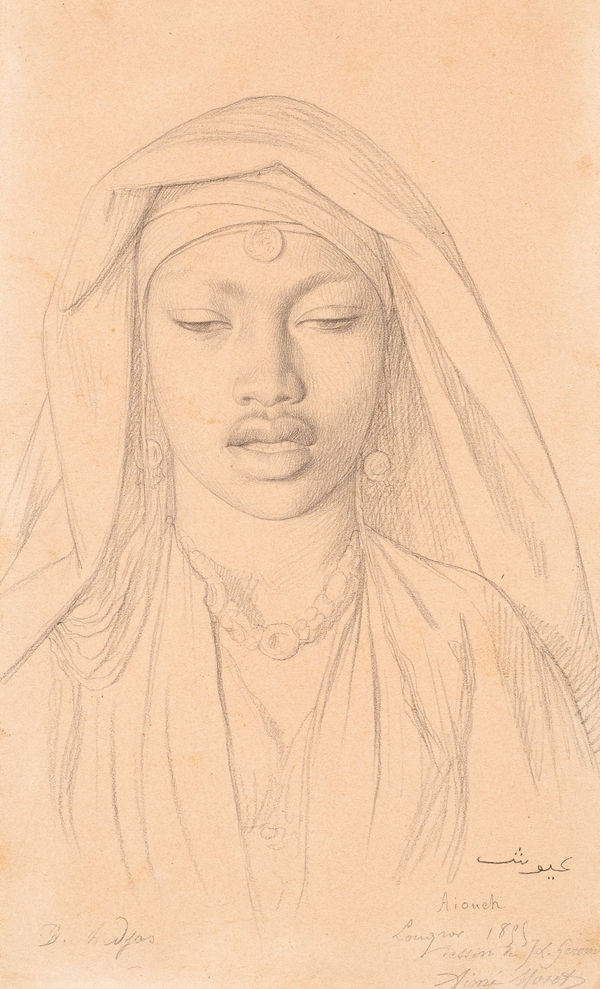
Alongside this, we present works by European artists whose travels profoundly shaped their artistic vision. Many journeyed out of personal curiosity and a desire for discovery rather than as part of official or colonial enterprises. While historical context inevitably accompanies such works, these artists were often motivated by the wish to observe, record and paint what they encountered. This is evident in several Orientalist works in the exhibition, including an important group of drawings by Jean-Léon Gérôme.
This spirit of artistic encounter is further embodied by an exceptional head study by Paul Gauguin from his Tahitian period. Among the most refined examples of its kind to appear on the market, the work distils Gauguin’s engagement with Polynesian culture into a composition of remarkable sensitivity and formal clarity. Widely exhibited in major international exhibitions, it stands as a pivotal work within the exhibition and encapsulates the complexities of artistic exchange, idealisation and transformation central to Gauguin’s work in the South Pacific.
The theme continues with the German artist Johann Gottfried Eiffe, one of the few European painters to visit Haiti. His journey coincided with a pivotal moment in the island’s history as it forged its identity following independence from European colonisation. His work offers a rare perspective on a society in transition.
Finally, the exhibition considers the travelling sitter and the narratives they embody. This is exemplified by the painting by Hippolyte Flandrin and a pastel by Marguerite Dubois, both executed within a French academic context, in which ideas of movement and identity converge and underscore the broader theme of exchange that runs throughout the show.
-
-
 MATEO MONTES DE OCA, Our Lady of Guadalupe, ca. 1770View more details
 -
LEONARDO FLORES, The Virgin Consolatrix or Our Lady of Consolation (‘Ad te suspiramus gementes et flentes in hac lacrimarum valle’), ca. 1680-1710View more details
-
LEONARDO FLORES, Saint John the Evangelist navigating the Ship of the ChurchView more details
-
FRANCISCO EDUARDO TRESGUERRAS, Virgen de Guadalupe con Las AspiracionesView more details
-
JULIUS HÜBNER, Head study of a JewView more details
-
JOHANN GOTTFRIED EIFFE, Portrait of Jean-Baptiste Riché, Comté de la Grand-rivière-du-nord (1780 – 1847)View more details
-
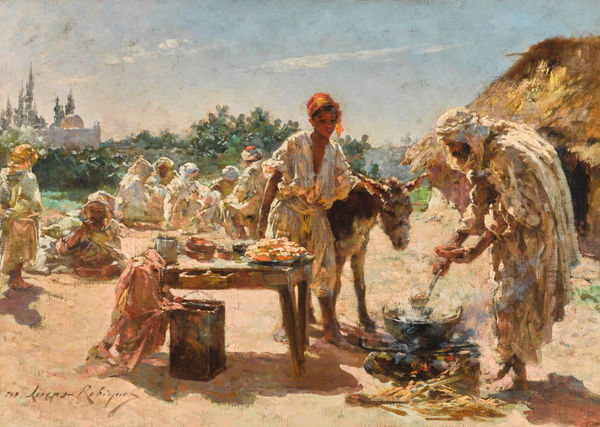
MARIE LUCAS-ROBIQUET, Taking Refreshemnt at Aïn SéfraView more details
-
HIPPOLYTE FLANDRIN, Two head studies of an African ManView more details
-
CANTE-WANIKA (NO HEART), Sioux muslin painting, ca. 1860s-1870sView more details
-
NARCISSE BERCHÈRE, Mosquée du Sultan Baybars II au Caire, 1878View more details
-
NARCISSE BERCHÈRE, Campement ArabeView more details
-
FREDERICK ARTHUR BRIDGMAN, Restaurant, Algiers (dedicated to Gérôme), 1886View more details
-
MARGUERITE DUBOIS, Head study of a man in a headscarfView more details
-
CHARLES-THÉODORE FRÈRE, The Watering Hole at SunsetView more details
-
JEAN-LÉON GÉRÔME, Portrait of a Woman (Aiouch), 1855View more details
-
EDUARD FRANKFORT, Self-Portrait in Bedouin costumeView more details
-
DOMENICO MORELLI, Study of a man in Oriental costume, 1885View more details
-
ROMANO DAZZI, A Camelryman, ca. 1923View more details
-