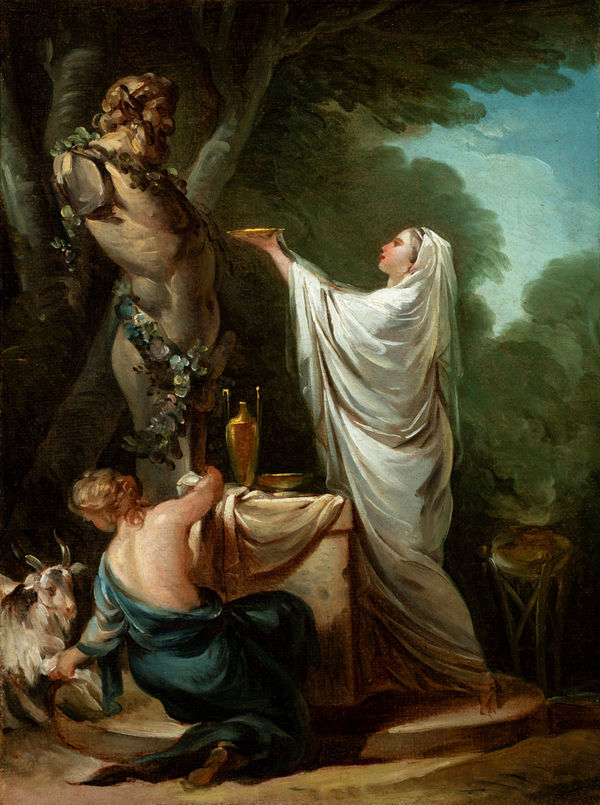
Colnaghi London is pleased to present its forthcoming exhibition centred on the role of wine within the Western iconographic tradition. Bringing together archaeological material alongside Old Master painting and sculpture, the exhibition traces a shift from wine’s function within communal and ritualised contexts to its later articulation as a vehicle for allegorical and symbolic meaning. Structured across antiquity, the early modern revival of Bacchic imagery, and the development of still life, the display considers how wine is variously configured within a broader visual language concerned with excess, transformation, and the transience of sensory experience.
In Vino Veritas: The Visual Rhetoric of Wine foregrounds wine as a primary signifier in the Western iconographic tradition. By juxtaposing archaeological material with Old Master paintings and sculptures, we trace a fundamental shift in the European gaze: from wine as a communal, ritualised tool to wine as a site of private, allegorical reflection. The narrative opens with the material culture of the Symposium. Here, Greek vessels - the krater, kylix, and amphora - are regarded as liturgical instruments and sophisticated carriers of meaning. This ritualised performance transitions during the Renaissance and Baroque into a Dionysian revival, tracing the metamorphosis of Bacchus from classical deity to a vehicle for exploring the "liminal" - the precarious line between civilised leisure and feral excess. Parodi’s masterful sculpture of Bacchus dialogues here with Van Dalen’s half bust portrait of the God of wine and Goya’s Priapus, engaging directly with the notion of paragone: the intellectual rivalry between the plastic and pictorial arts. The exhibition culminates in the evolution of the still life. In the Dutch banketje, Spanish bodegón, and Italian natura morta, wine is deconstructed into its constituent elements: the crystalline transparency of a Roemer, the bruised bloom of a vine, the smooth surface of the grapes. From the tonal restraint of Van Son to the warmer naturalism of Meléndez, these works carry a heavy symbolic subtext, functioning as ontological meditations on Vanitas, light, and the transience of the senses. In bridging the material presence of the ancient vessel with the elegant artifice of Baroque and Neoclassical masterpieces, the exhibition aims at reclaiming wine as a cornerstone of European visual rhetoric.
-
FRANCE
-
ITALY
-
 Torso of Silvanus, Roman, Imperial Period, 2nd century A.D.View more details
 -
Statue of a Boy, Roman, Imperial Period, 2nd Century A.D.View more details
-
BARTOLOMEO CAVAROZZI, The Sorrows of AmintaView more details
-
ANTONIO SUSINI, Braccio di Bartolo, The Medici Court-Dwarf known as Morgante (ca. 1535-1594), 1580-1590View more details
-
FILIPPO PARODI, Bacchus, ca. 1670View more details
-
-
SPAIN
-
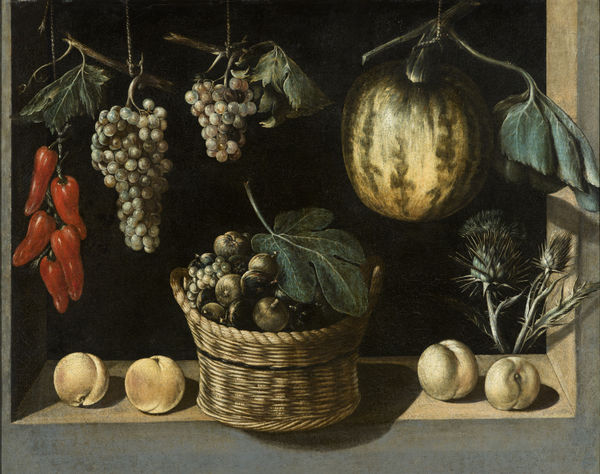
MASTER OF STIRLING-MAXWELL, Still Life with Basket of Fruit, Melon and Grapes, 1615 - 1625View more details
-
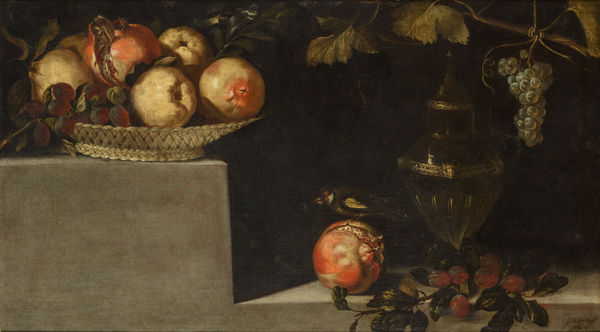
JUAN VAN DER HAMEN, Still life with fruit and vase, 1626View more details
-
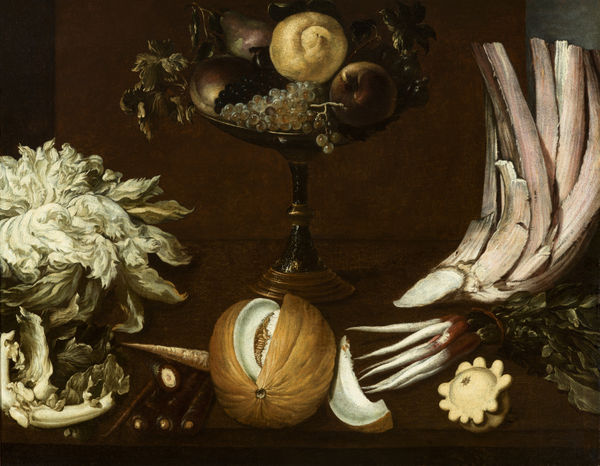
AGUSTÍN LOGÓN, Still life with fruits and vegetables, ca. 1640View more details
-
ANTONIO PONCE, Still life with a basket of fruit and tray with sweets, ca. 1640View more details
-
JUAN DE ESPINOSA, Still Life with Apples, Walnut, Grapes and Acorns, c. 1646View more details
-
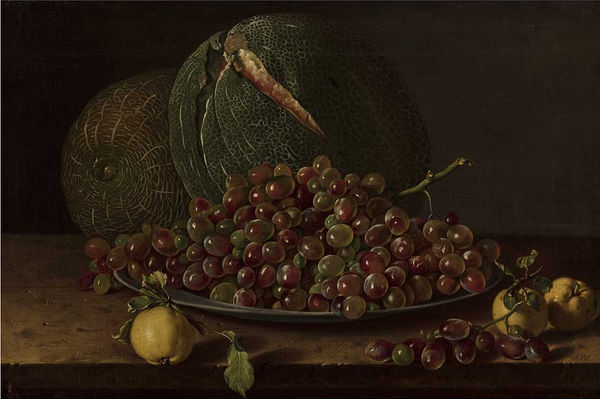
LUIS EGIDIO MELENDEZ, Still life with a plate of grapes, melons, and apples, c. 1770View more details
-
FRANCISCO DE GOYA Y LUCIENTES, Sacrifice to Priapus, 1770 or 1771View more details
-
-
FLANDERS & CONTINENTAL EUROPE
-
JAN VAN BIJLERT, The Five Senses, Early 1630sView more details
-
JAN VAN DALEN, Bacchus, ca. 1645View more details
-
WILLEM CLAESZ. HEDA, A Vanitas Still Life with a Broken Roemer, an Upturned Tazza and a Peeled Lemon, All on a Ledge, 1648View more details
-
JORIS VAN SON, A still-life of a swag of fruit hanging before a stone alcove containing a roemer, 1655View more details
-
JOHANN GEORG HANN, A rare Viennese silver wine cooler, 1792View more details
-
-
GREECE
-
Kylix, Greek, Mycenaean, ca. 14th century B.C.View more details
-
Kylix, Greek, Mycenaean, ca. 14th century B.C.View more details
-
ATTRIBUTED TO THE BIZOUMIS PAINTER, Black-figure Trefoil Oinochoe, Greek, Attic, ca. 530-520 B.C.View more details
-
ATTRIBUTED TO THE TYSZKIEWICZ PAINTER, Red-figure Amphora (Type C), Greek, Attic, ca. 480 B.C.View more details
-
ATTRIBUTED TO THE ALKIMACHOS PAINTER, Red-figure Nolan Amphora, Greek, Attic, ca. 470-460 B.C.View more details
-
Funnel Strainer, Greek, ca. late 4th century B.C.View more details
-
Black-figure Eye Cup, Greek, Attic, ca. 530-520 B.C.View more details
-
Black-figure Neck Amphora, Greek, Chalcidian, ca. 530-520 B.C.View more details
-
Hydria, Greek, Crete, ca. 700 B.C.View more details
-
Amphora, Byzantine, ca. 6th century A.D.View more details
-
Basin, Byzantine, ca. 6th century A.D.View more details
-
"Carian Wild Goat Style" Trefoil Oinochoe, Eastern Greek, ca. late 7th–early 6th century B.C.View more details
-
Torpedo-Shaped Amphora, Hellenistic Greek, ca. 3rd–2nd century B.C.View more details
-
Krater, Greek, Proto-Geometric Period, ca. mid-9th century B.C.View more details
-
Kylix, South Italian Greek, ca. 4th century B.C.View more details
-
Eleven Cypriot Wheel-Made Black Slipware Vessels, Cyprus, Cypro-Geometric Period III, ca. 850 - 750 B.C.View more details
-
Bearded Head of Silenus, Greek, 4th century BCView more details
-
-
Exhibiting At
26 Bury Street
London SW1Y 6AL
Opening Hours
Exhibition on view from Monday, 15 June to Friday, 31 July
Monday - Friday, 10 AM - 6 PM
Opening Preview: 25 June, 6 PM - 8 PM (rsvp@colnaghi.com)